
Installing a commercial pizza oven is about much more than choosing the right appliance. A poorly designed pizza oven flue system can lead to poor performance, excessive smoke, ongoing maintenance issues and even costly alterations after installation.
Whether you’re fitting a wood-fired or gas pizza oven, the flue system plays a vital role in ensuring safe operation and reliable performance. At Chimflue, we’ve worked with restaurants, pizzerias and commercial kitchens across the UK, helping businesses install flue systems that are designed to last.
Here are ten of the most common pizza oven flue installation mistakes—and how to avoid them.
1. Choosing the Wrong Flue Diameter
One of the biggest mistakes is installing a flue that is either too small or unnecessarily large for the appliance.
A flue that is undersized can restrict airflow and reduce chimney draw, while an oversized flue may cool the gases too quickly, affecting performance.
The correct flue diameter should always be selected using the oven manufacturer’s recommendations and the overall chimney flue design.
2. Not Installing Enough Chimney Height
The height of the chimney has a direct impact on how well a pizza oven performs.
If the chimney is too short, it may struggle to create sufficient natural draft, leading to smoke spilling from the oven opening instead of exiting through the flue.
Every installation is different, so the optimum chimney height should be determined during the design stage.
3. Too Many Bends in the Flue
Every bend creates additional resistance within the system.
Although bends are sometimes unavoidable, excessive offsets can reduce airflow and make it harder for combustion gases to leave the appliance efficiently.
Where possible, flue systems should follow the most direct vertical route.
4. Using the Wrong Type of Flue System
Not every chimney system is suitable for every application.
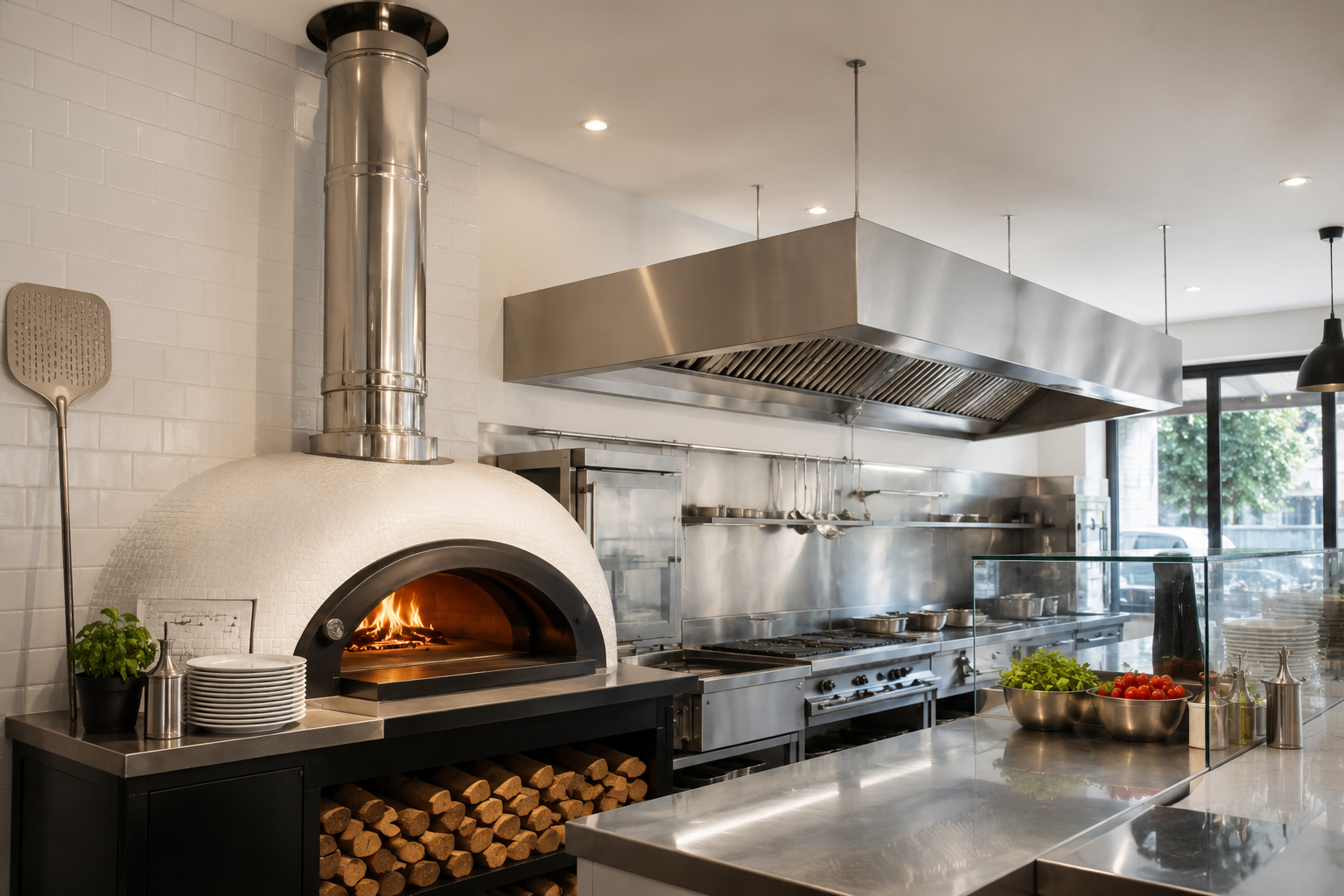
Commercial pizza ovens often require insulated twin wall chimney systems that are designed to operate safely at high temperatures while maintaining adequate flue gas temperatures.
Choosing the correct specification helps improve performance and increases the lifespan of the twin wall flue system.
5. Poor Support and Fixing
Commercial chimney systems can become extremely heavy, particularly on taller installations.
Insufficient support brackets or incorrectly positioned fixings can place unnecessary stress on the flue, potentially leading to movement over time.
A professionally designed support system helps ensure the chimney remains secure for years to come.
6. Incorrect Roof Penetrations
Passing a flue through a roof requires careful planning.
Poorly installed flashings or weathering details can result in water ingress, corrosion and expensive remedial work.
Using the correct flashing components for the roof type helps create a weatherproof installation while maintaining the integrity of the building.
7. Ignoring Expansion and Movement
Commercial flues expand and contract as they heat up and cool down.
If this natural movement isn’t considered during installation, unnecessary stress can be placed on joints, supports and the appliance connection.
Allowing for thermal expansion is an important part of good chimney design.
8. Poor Chimney Termination Position
Where the chimney finishes is just as important as the route it takes.
A termination positioned too close to nearby buildings, roof structures or air intakes may result in smoke nuisance or poor dispersion.
Each project should be assessed individually to determine the most suitable discharge location.
9. Mixing Different Chimney Components
Combining components from different chimney manufacturers can cause compatibility issues and may invalidate product certifications or warranties.
Using a complete, compatible chimney system ensures every section is designed to work together safely and efficiently.
10. Leaving the Flue Design Until the Last Minute
One of the most common issues we see is treating the chimney as an afterthought.
By the time the oven has been installed, available routes, structural supports and discharge locations may already be limited.
Involving a specialist flue contractor early in the project often results in a cleaner installation, improved performance and reduced installation costs.
Why Professional Flue Design Matters
Every commercial pizza oven installation is unique. Factors such as the oven type, fuel source, building layout, surrounding properties and available chimney route all influence the final design.
Taking the time to design the flue correctly from the outset can help avoid unnecessary delays, expensive modifications and future operational problems.
At Chimflue, we provide bespoke commercial flue solutions for restaurants, pizzerias and hospitality venues throughout the UK. From initial design advice through to manufacture and installation, our experienced team can help ensure your pizza oven flue system performs exactly as it should.
If you’re planning a new pizza oven installation or upgrading an existing chimney system, contact Chimflue to discuss your project with one of our specialists.


